Offline-First Mobile · Healthcare
Smart Care Mobile
Android healthcare delivery for remote Bangladesh clinics where internet doesn't exist. Everything works offline — forms, sync, access control.
Overview
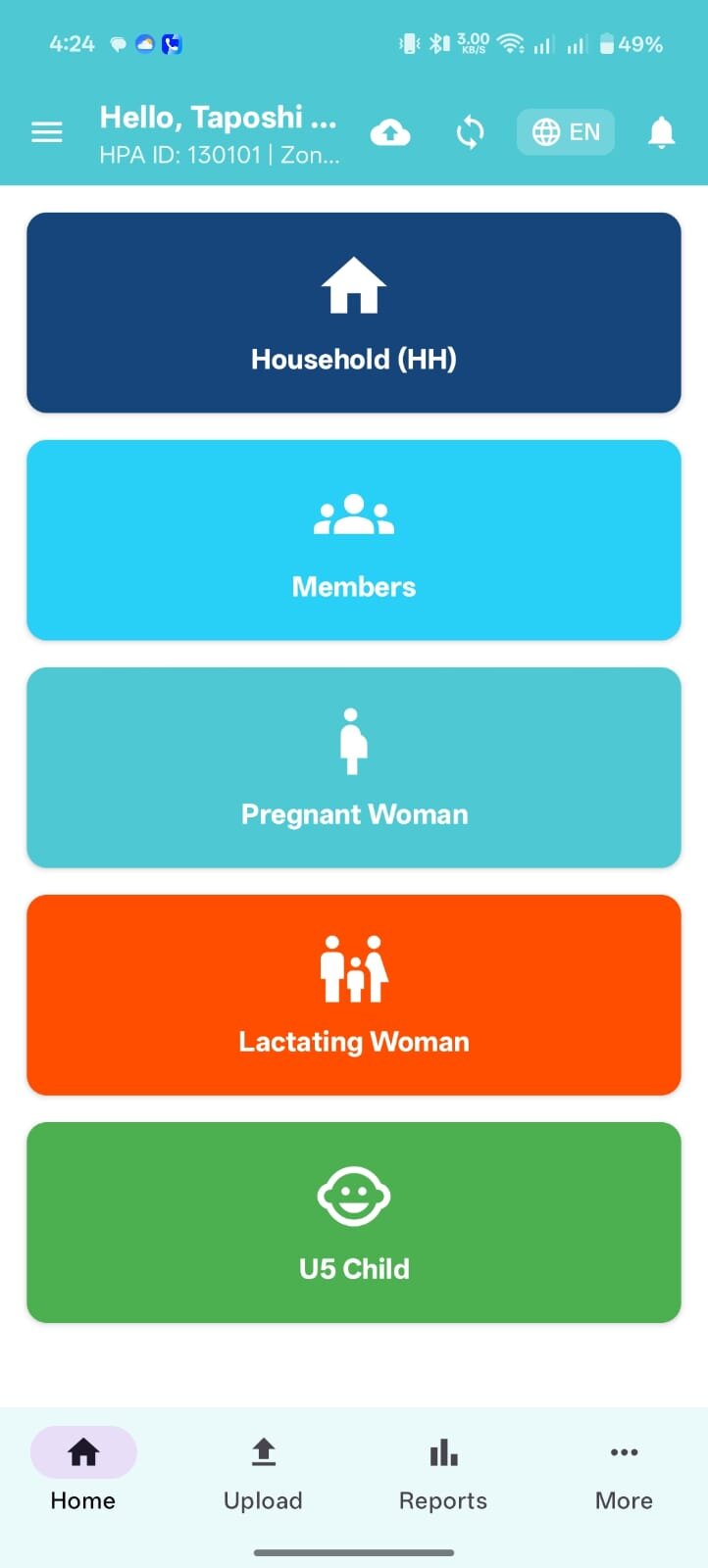
Smart Care Mobile is a native Android healthcare delivery system built for remote clinics across Bangladesh where reliable internet simply doesn't exist. The app powers offline-first data collection, dynamic form rendering, and bidirectional synchronization — all from a single Kotlin codebase spanning 294 files.
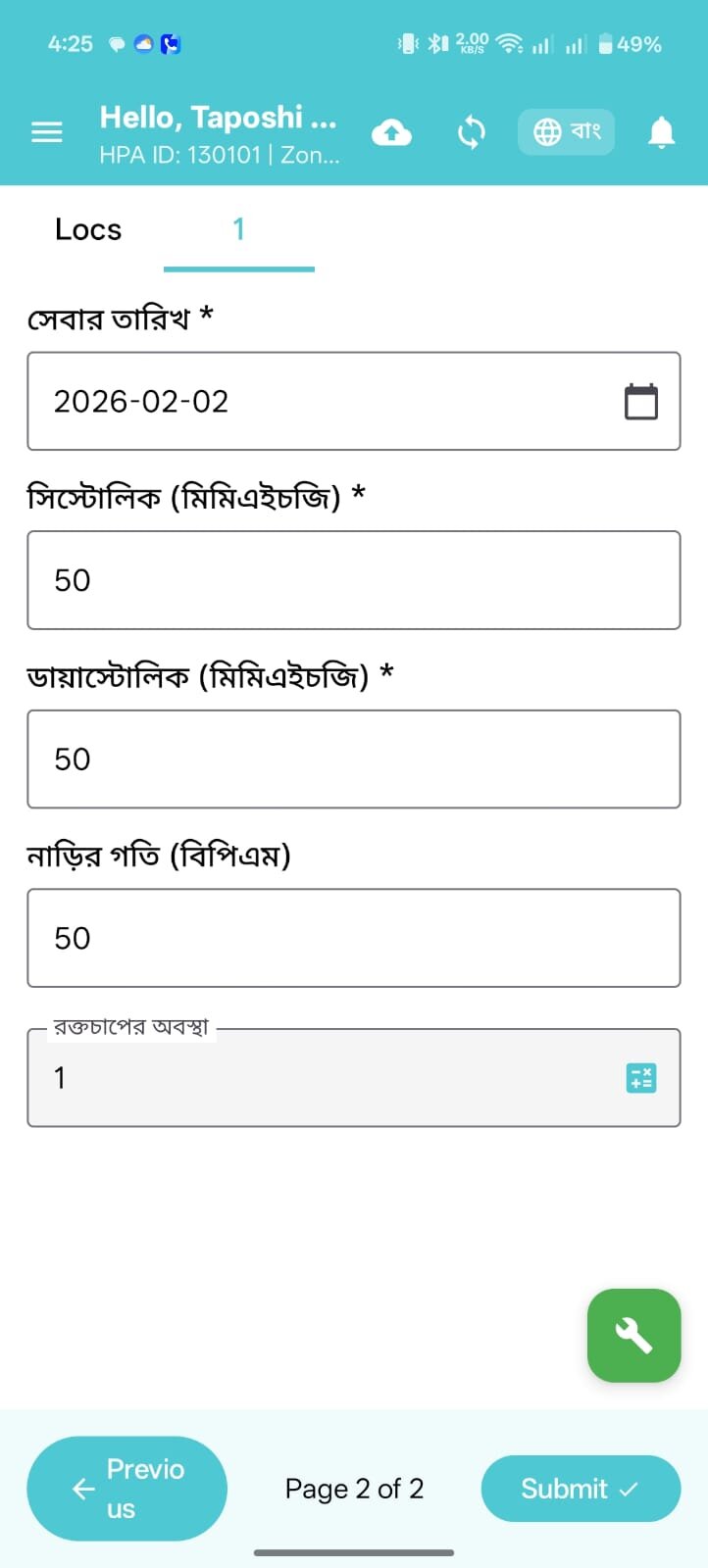
Healthcare workers use it daily to register households, conduct health screenings, and submit data that syncs when connectivity is available. The form engine renders entirely from database configuration, meaning new survey instruments deploy without touching a single line of code.
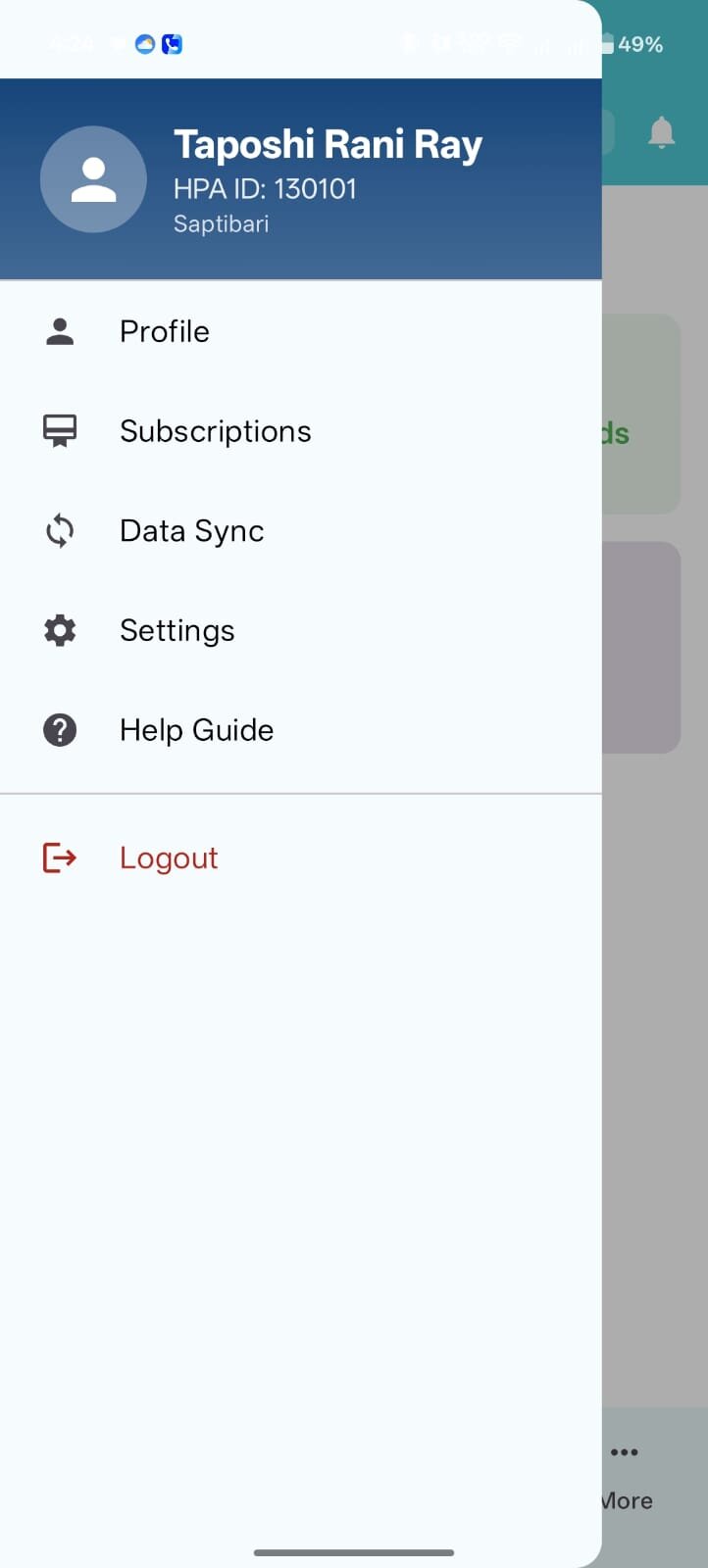
The system serves 1,000+ remote households across a multi-level geographic hierarchy, with role-based access control enforced from national level down to individual wards.
Hard Problems
Challenge
Database-driven form system with complex cross-field validation, conditional visibility, and placeholder resolution — at scale across dozens of survey instruments.
Solution
Custom FieldConfigEngine that parses SQL-like condition strings, resolves cross-field placeholders at render time, and validates against database-stored rules. Forms generate entirely at runtime from configuration tables.
Challenge
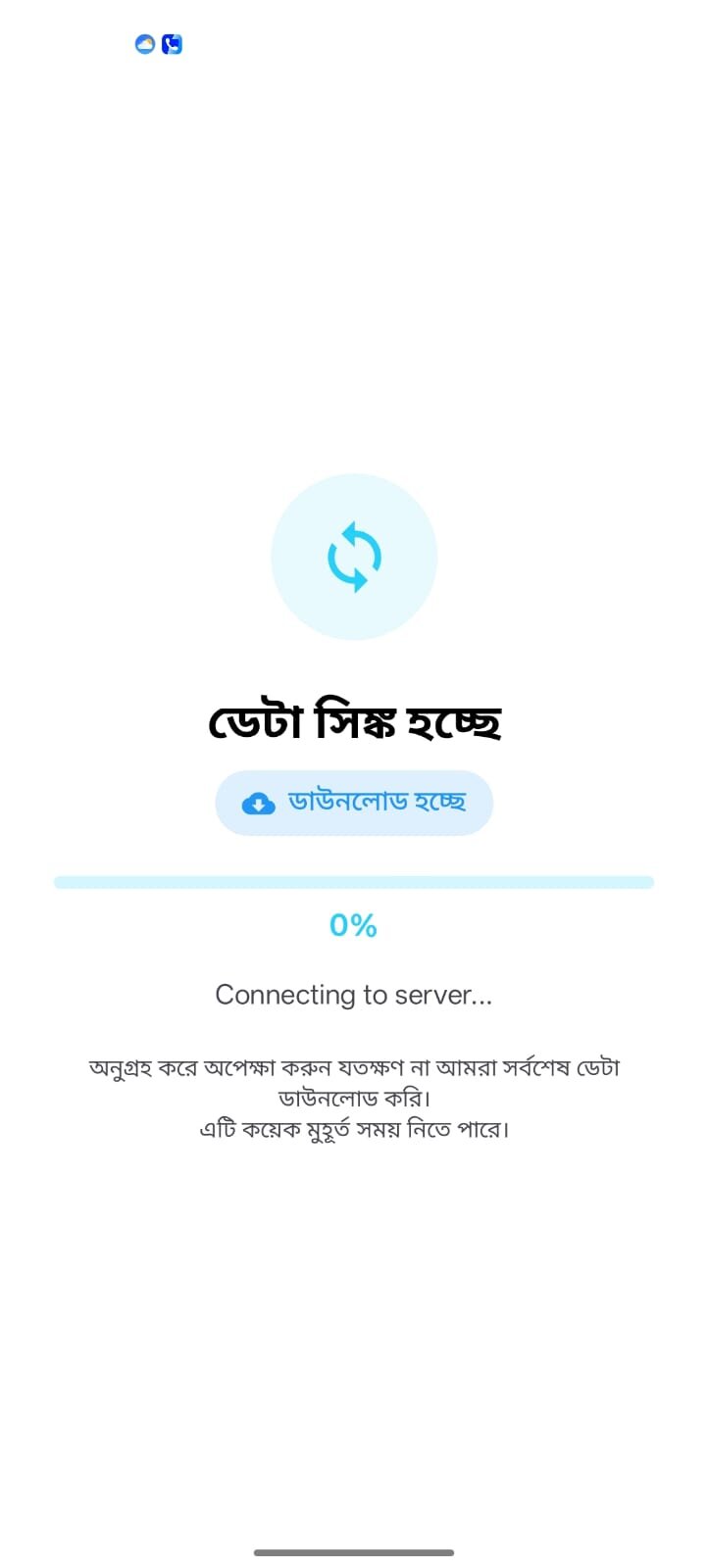
Bidirectional data sync over unreliable networks for 1,000+ households with conflict resolution and no data loss.
Solution
ZipSyncOrchestrator that batches records into compressed ZIP payloads, handles partial uploads with retry logic, and resolves conflicts using server-authoritative timestamps with local change tracking.
Challenge
6-level geographic access control (national → division → district → upazila → union → ward) with dynamic table resolution.
Solution
LocPathResolver pattern that dynamically resolves table names and access boundaries based on authenticated user's position in the hierarchy. Single query path regardless of access level.
Key Decisions
| Decision | Chose | Over | Because |
|---|---|---|---|
| Database layer | Raw SQLite | Room ORM | Needed direct SQL control for dynamic form queries, custom cursor mapping, and zero annotation processing overhead across 294 files. |
| Dependency injection | Koin | Hilt/Dagger | Faster build times, lightweight Kotlin-first API, no annotation processing — critical for a 294-file codebase. |
| Architecture pattern | SSOT with centralized resolvers | Distributed logic | Eliminated code duplication across 294 files. Every data transformation has exactly one source of truth. |